Supplier price updates.
Extracted, checked,
and
ready to sync.
An automated system that reads supplier price changes from emails, PDFs, spreadsheets, and scanned files, then prepares clean updates for your store systems.
What is ICS Compute Autonomous Price Sync?
ICS Compute Autonomous Price Sync is an AI-assisted pricing workflow designed to process supplier price updates from emails, PDFs, spreadsheets, scanned files, and other supplier documents.
The system extracts product and pricing information, matches updates against existing product and price data, applies validation checks, and prepares clean price changes for downstream store, ERP, POS, or pricing workflows.
Pricing and procurement teams retain control over margin-sensitive changes and final approval, while the system handles the repetitive extraction, matching, validation, and update preparation steps.
Manual price entry
slows down margin control.
Supplier updates arrive in different formats. Teams retype product codes, check prices by hand, and chase mismatches across files before the update can reach the store system.
Pricing delay
Price changes wait while teams find, read, and enter updates manually.
Manual workload
Procurement and pricing teams spend too much time copying product codes and prices from supplier files.
Supplier formats
PDFs, spreadsheets, scans, and informal messages make product matching harder.
Margin leakage
Old prices and late updates make it harder to protect margin when supplier costs change.
Five steps.
Three of them autonomous.
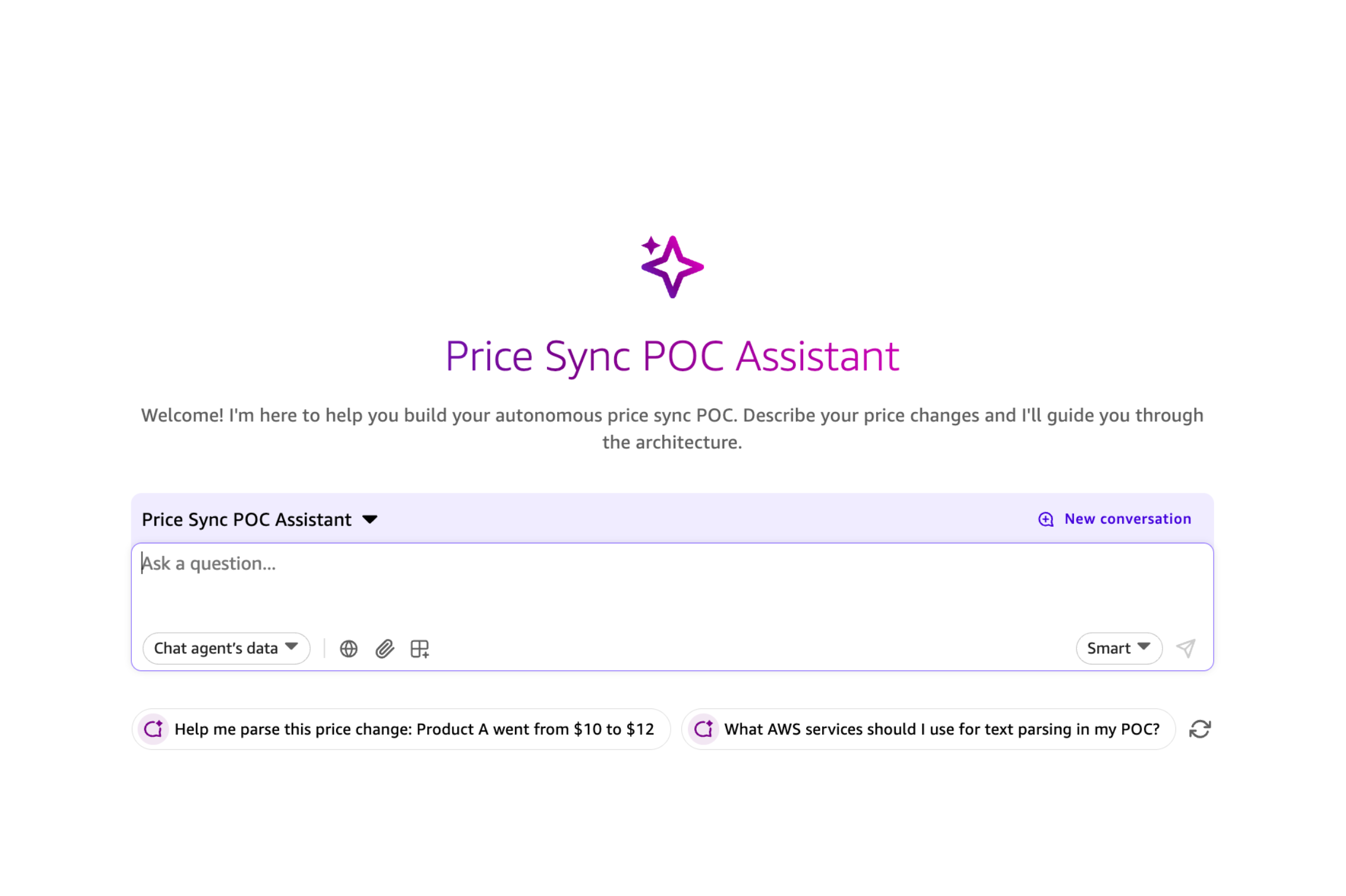
Your procurement team still owns pricing decisions. The system reads supplier files, matches products, validates changes, and prepares updates for review.
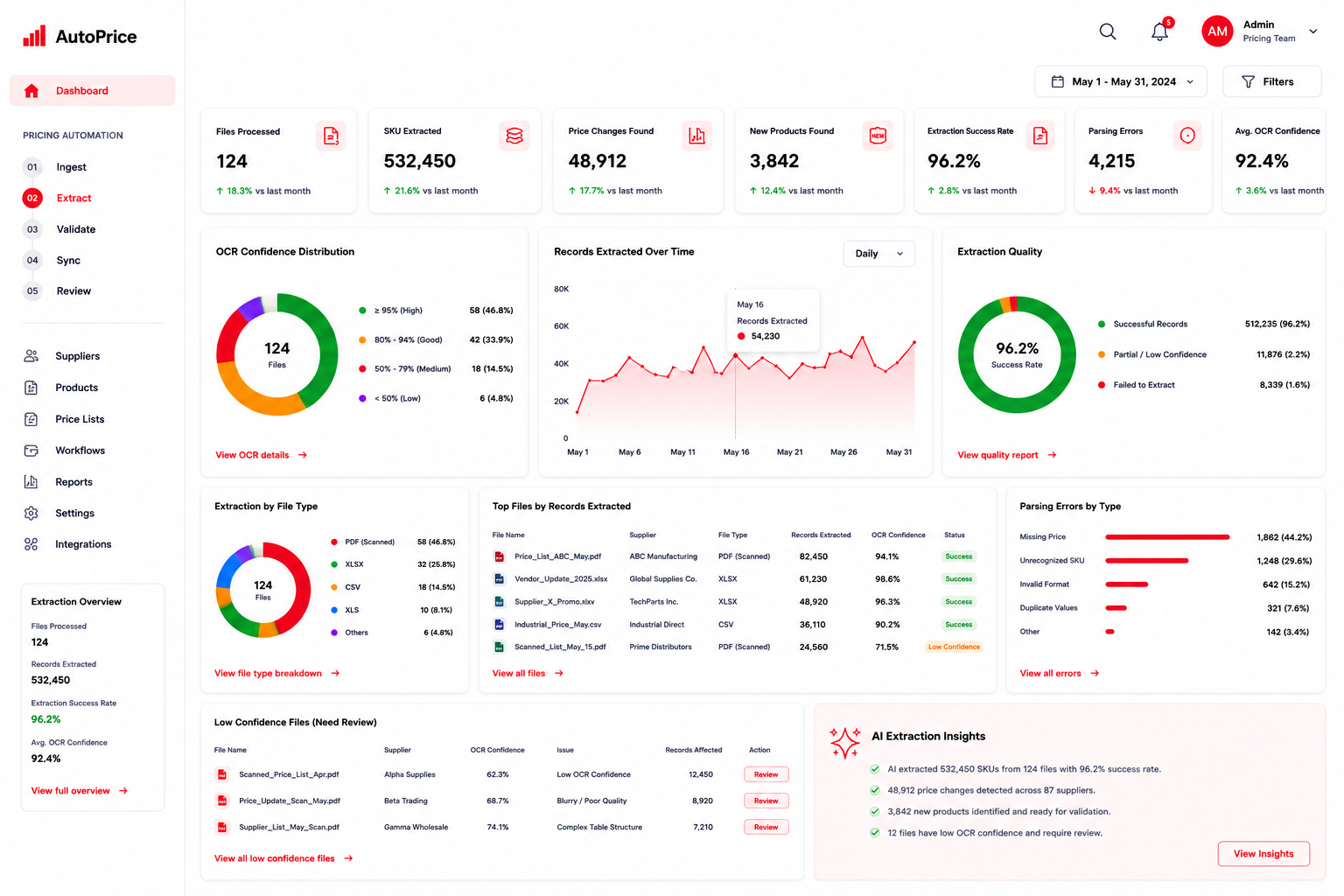
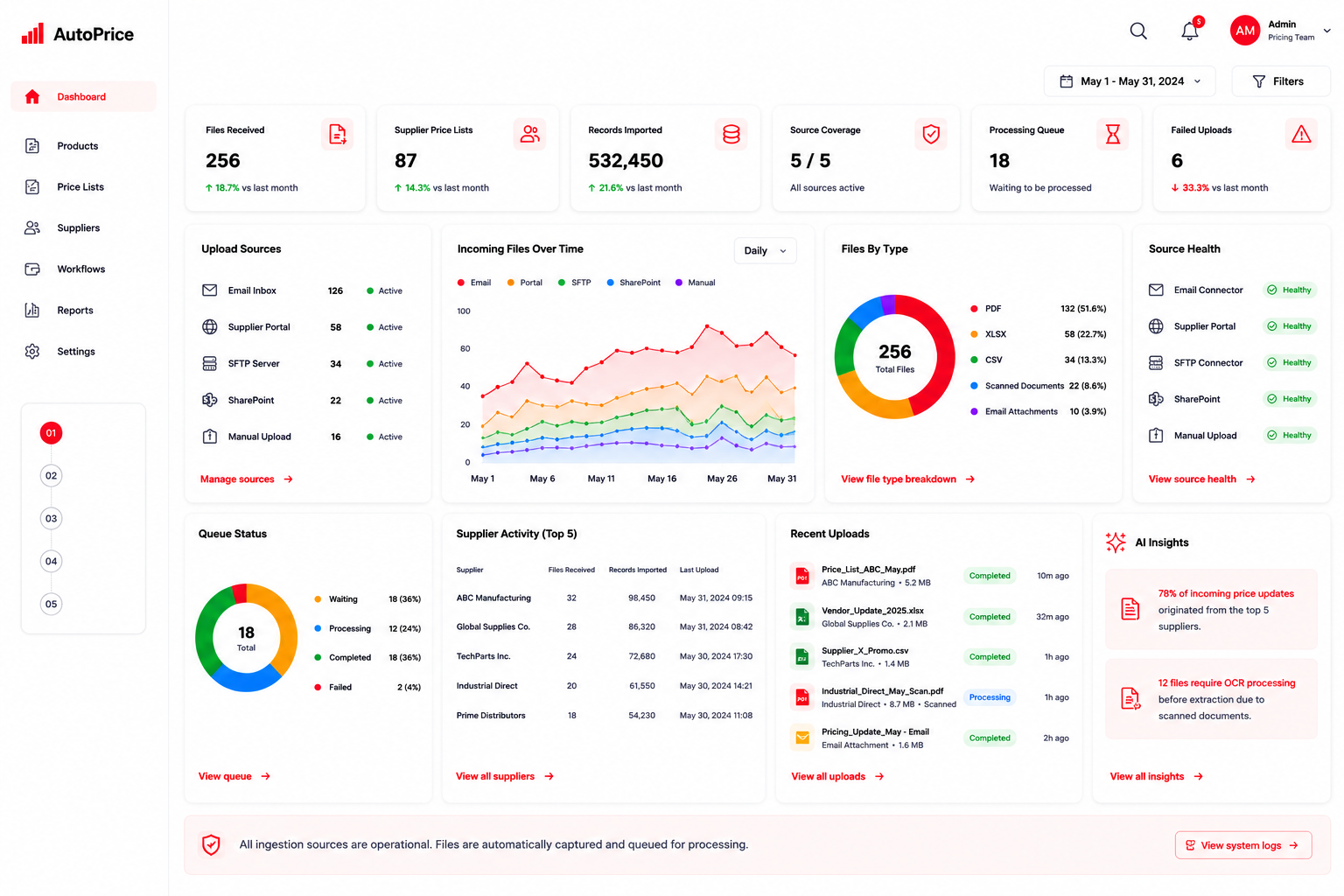
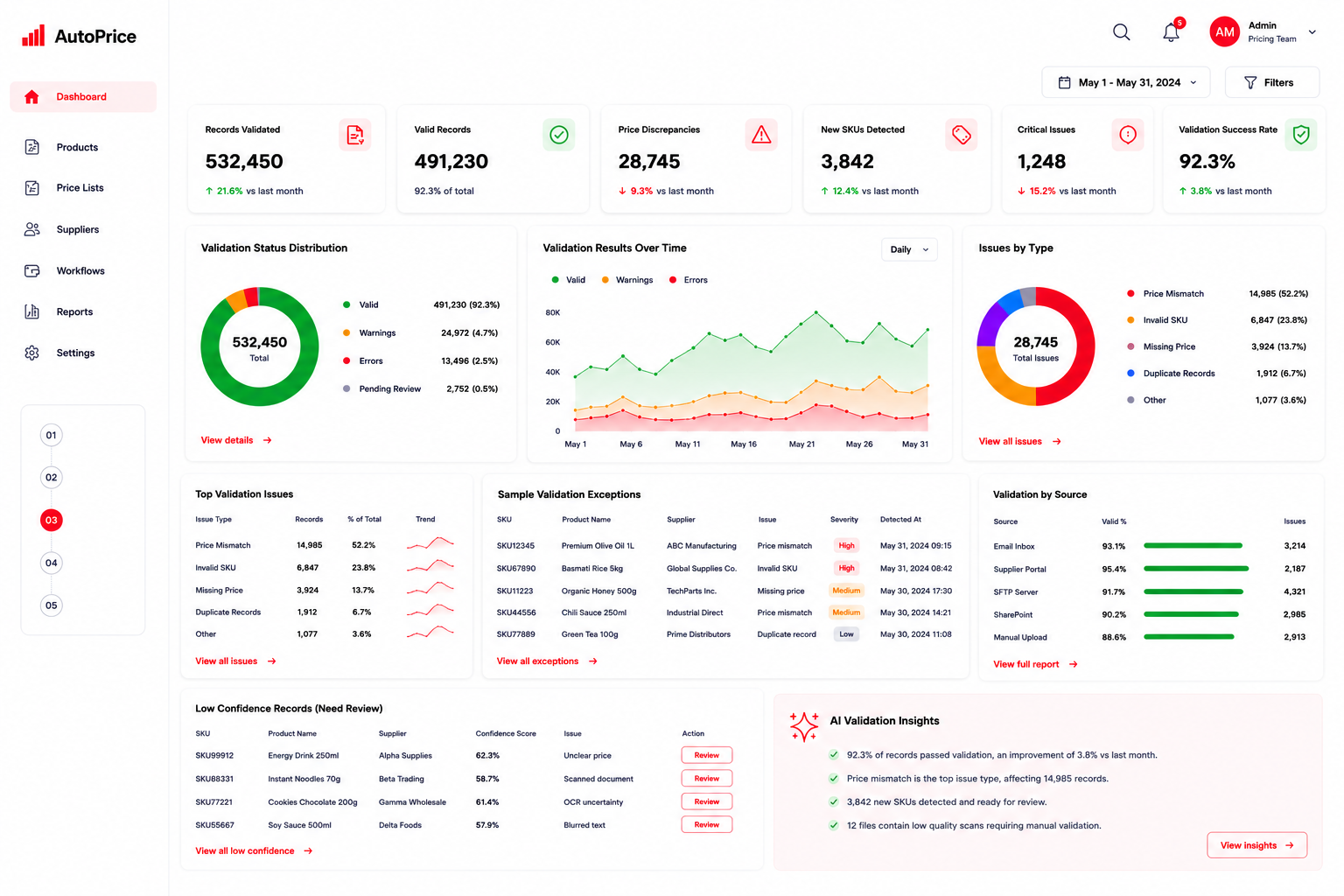
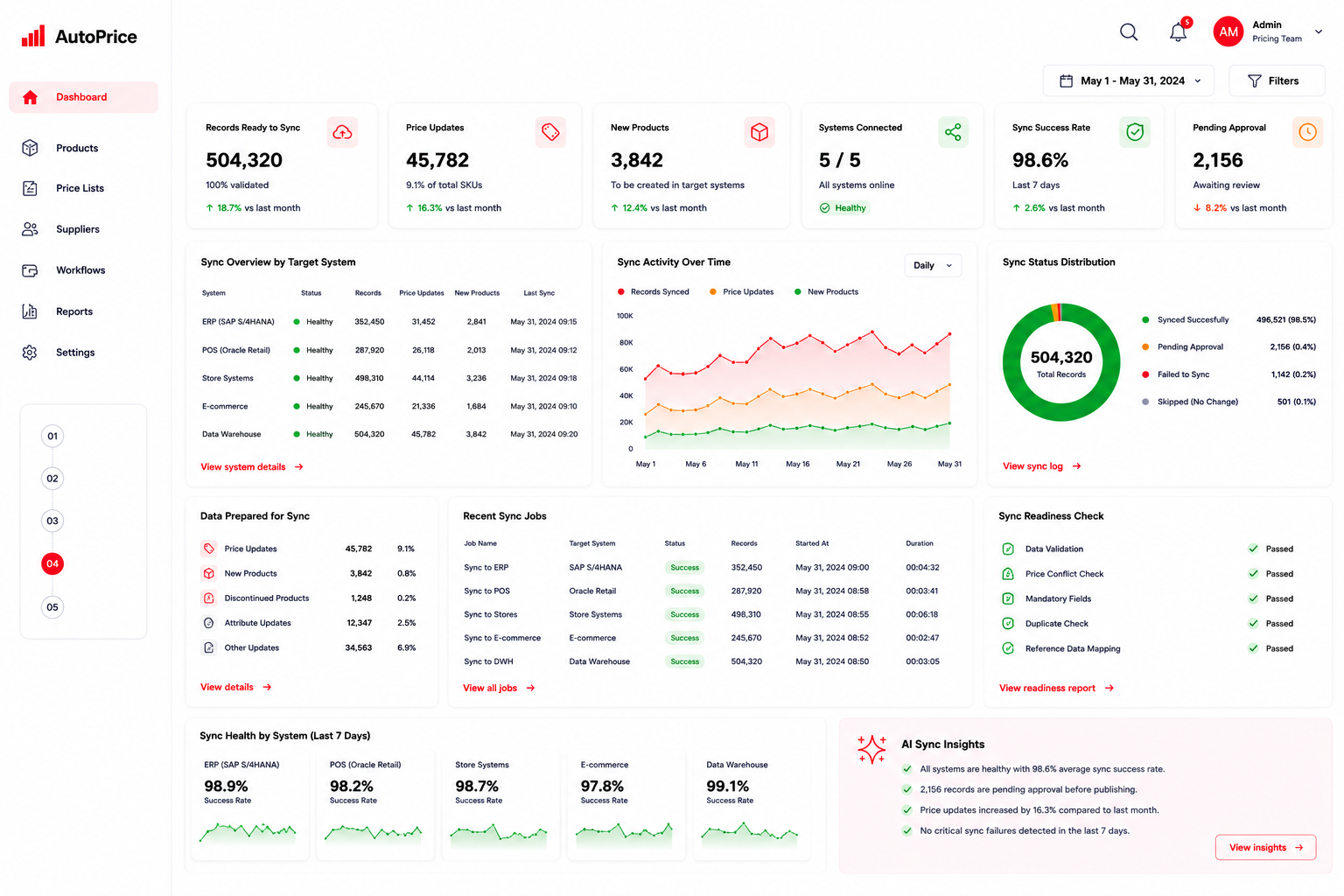
The system extracts and validates. Your team makes the final call on pricing.
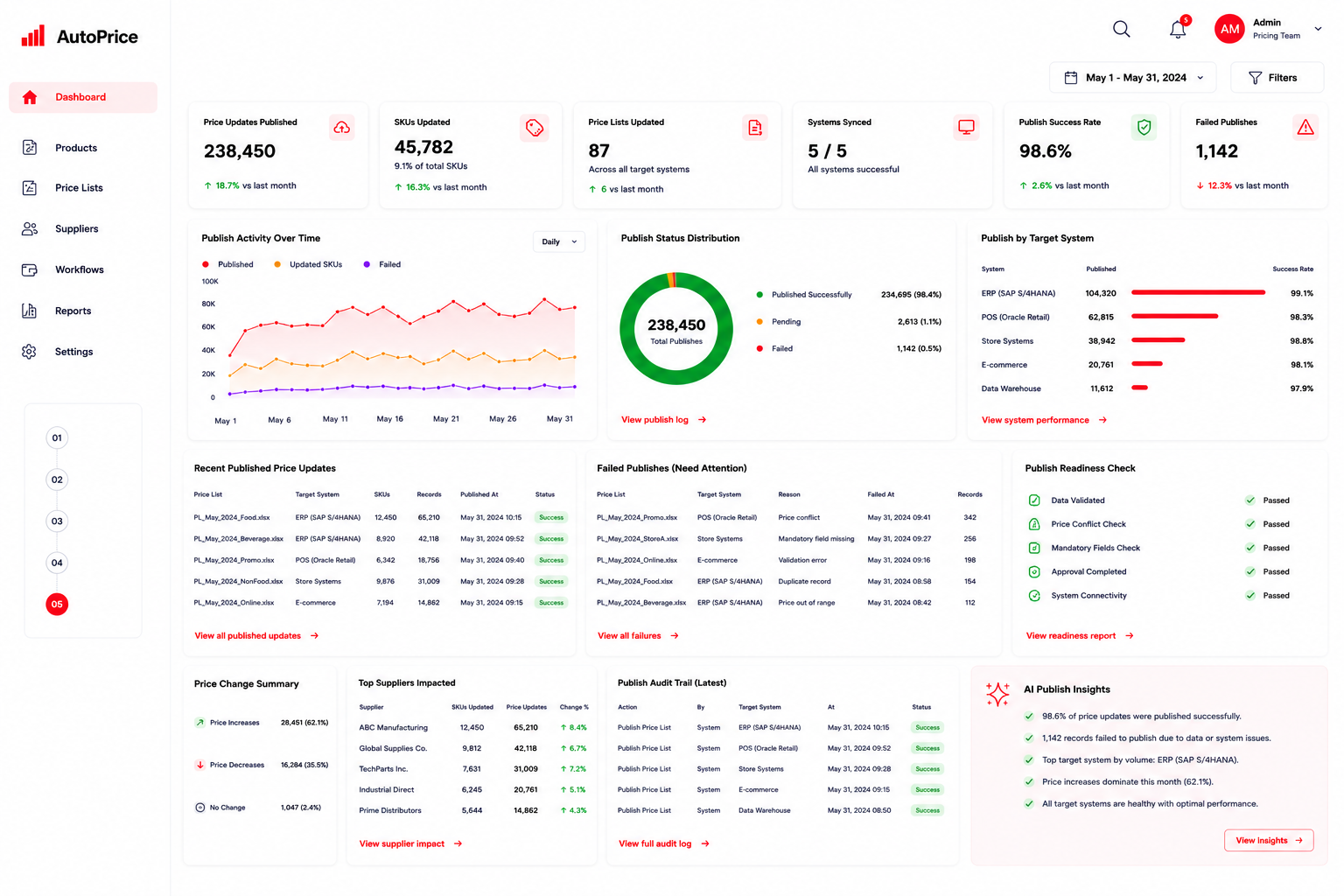
What your team actually sees.
Live dashboard, supplier updates, extraction status, validation issues, margin alerts, and approval queue in one view.
Less manual work.
Cleaner price updates.
-
Less manual work
Teams review clean updates instead of retyping every row from supplier files.
-
Better margin control
Price changes that affect margin are flagged before approval.
-
Cleaner pricing data
Validation checks catch product, unit, and price mismatches before sync.
-
Faster update flow
Supplier price changes move through a structured review queue instead of manual handoff.
Questions about supplier price synchronization
Common questions from procurement, pricing, retail operations, finance, and technology teams evaluating automated supplier price updates.
What is supplier price synchronization?
Supplier price synchronization is the process of receiving, extracting, validating, and preparing supplier price changes so they can move into internal pricing or store update workflows. Automating these steps can reduce repetitive manual data entry while keeping pricing teams responsible for review, exceptions, and final approval.
Who is ICS Compute Autonomous Price Sync for?
ICS Compute Autonomous Price Sync is designed for procurement, pricing, retail operations, finance, and technology teams that manage frequent supplier price updates across large product catalogs. It is particularly relevant where price changes arrive in different document formats and require repeated manual extraction, matching, validation, and review.
What supplier file formats can the system process?
The system is designed to process supplier price information from sources such as emails, PDFs, spreadsheets, scanned documents, and other supplier files. The exact formats and document structures supported depend on the organization's supplier inputs, available data quality, and implementation requirements.
How does the system match supplier price updates to products?
The system extracts relevant product and pricing information from supplier documents and compares it against existing product or pricing data. Matching rules and validation checks can then be used to identify the correct product records and surface uncertain or unmatched items for review.
How are price changes validated before they are applied?
Extracted price updates can be checked against existing product, pricing, and business information before they move further through the workflow. Validation can help identify missing data, inconsistent values, unmatched products, and margin-sensitive changes that require additional review.
Does Price Sync automatically change prices in ERP or POS systems?
ICS Compute Price Sync automates extraction, product matching, validation, and update preparation while keeping pricing approval under human control. How approved changes are passed into ERP, POS, store, or pricing systems depends on the configured workflow and integration. Margin-sensitive changes and exceptions can remain subject to review before prices go live.
How does Price Sync help protect margins?
Price Sync can compare supplier updates with existing product and pricing data and flag margin-sensitive changes for review before approval. This gives pricing and procurement teams earlier visibility into price movements that may affect margin while keeping final pricing decisions under human control.
What is reviewed during the Price Sync assessment?
The assessment reviews how supplier price updates currently enter the organization, the document formats involved, the manual steps required, and where extraction, matching, validation, or approval creates operational delay. This helps identify which parts of the workflow may be suitable for automation while preserving the required pricing controls.
Show us your supplier price updates.
We'll show you where the process slows down.
We map how your suppliers send prices, identify manual steps, and define where automation can reduce delay, errors, and margin leakage.
Free operational assessment
We review how you currently handle supplier price updates and show which file formats, approval rules, and store-system handoffs are ready for automation.