Dynamic pricing that protects.
your margin.
A pricing system that combines your existing pricing rules with machine learning recommendations based on demand, competitor movement, inventory, and sales signals.
What is ICS Compute Dynamic Pricing?
ICS Compute Dynamic Pricing is a machine-learning-assisted pricing system designed to recommend price changes while keeping existing business rules and margin controls in place.
It analyzes signals such as demand, competitor movement, inventory pressure, cost changes, and sales performance, then recommends price adjustments within approved pricing rules and minimum margin boundaries.
Automatic guardrails block recommendations that fall outside defined pricing constraints, while pricing teams retain control over strategy, approvals, and rollout decisions.
Fixed pricing rules miss market movement.
Pricing teams know static rules are too rigid. But handing margin control to a black-box model is risky. The gap is a system that reads market signals while still enforcing your business rules.
Static rules
Pricing logic struggles to react when demand, cost, inventory, or competitor conditions shift.
Demand signals
POS activity, inventory pressure, and customer behavior are often disconnected from pricing decisions.
Unchecked ML
Black-box pricing can chase volume while silently weakening margin control.
Competitive response
Competitors move while pricing teams are still collecting data, reviewing spreadsheets, and checking margins.
Five steps.
Three of them always running.
Your pricing team keeps strategic ownership: minimum margins, category rules, approval policy, and rollout decisions. The ML layer reads the market and recommends changes inside those boundaries.
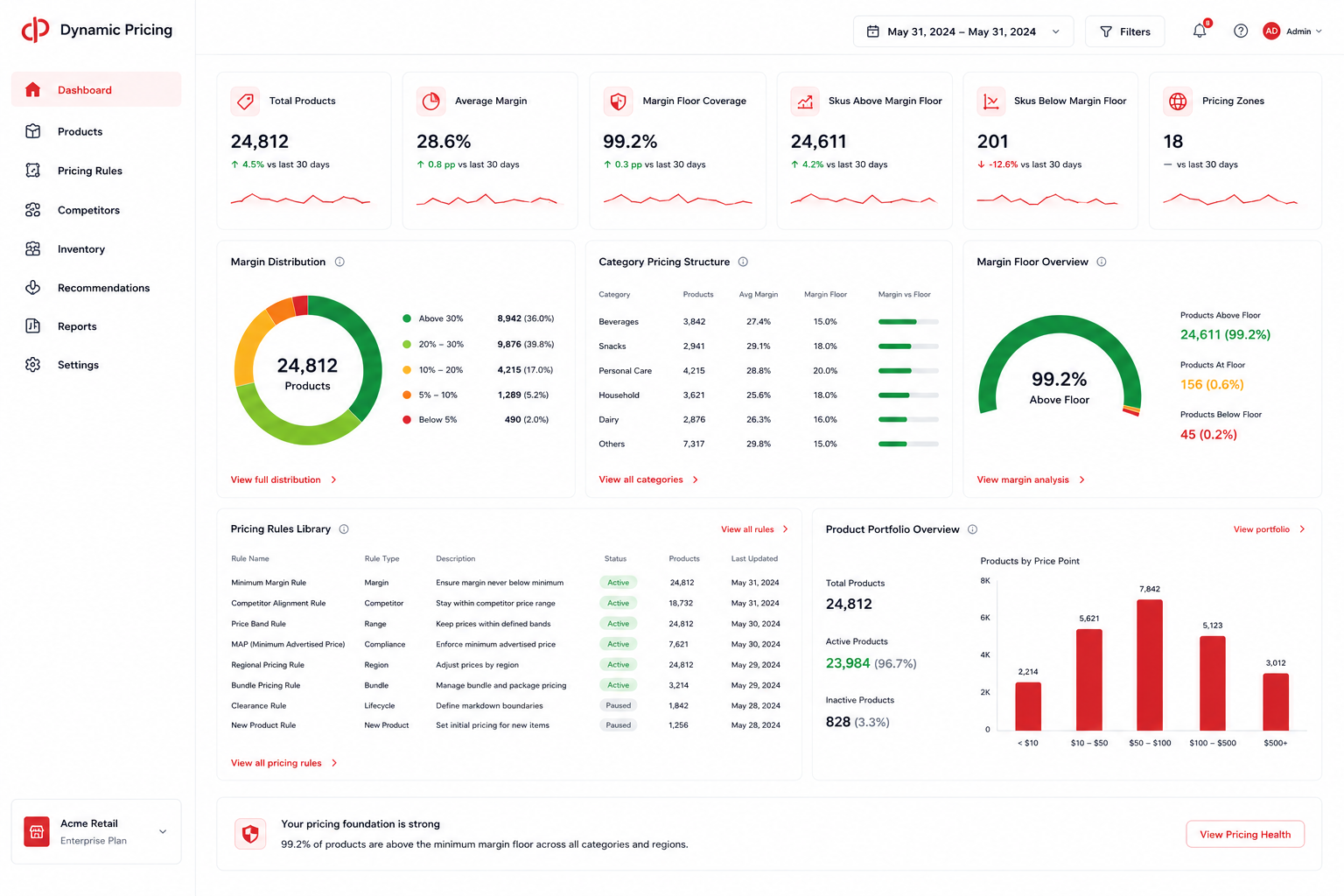
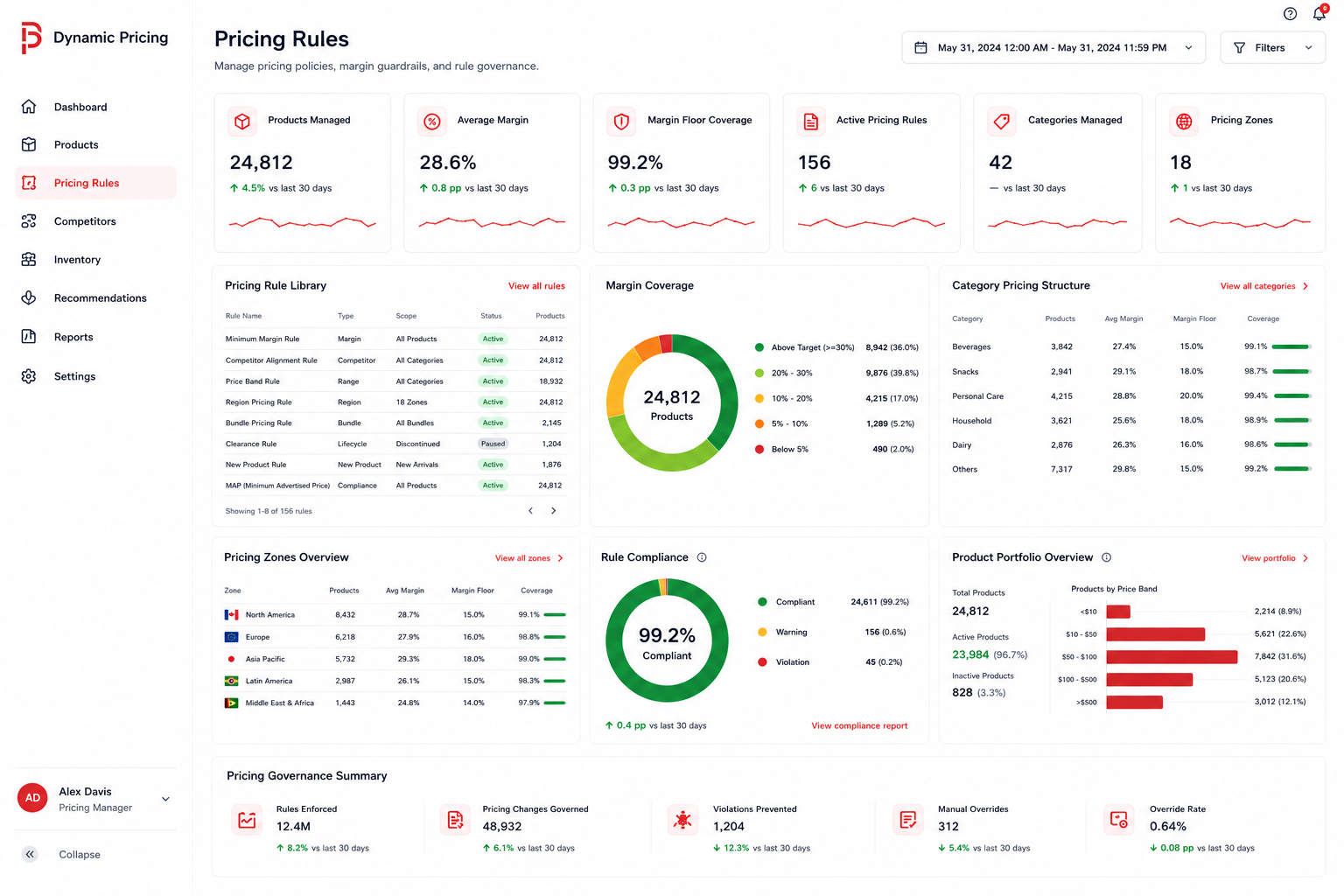
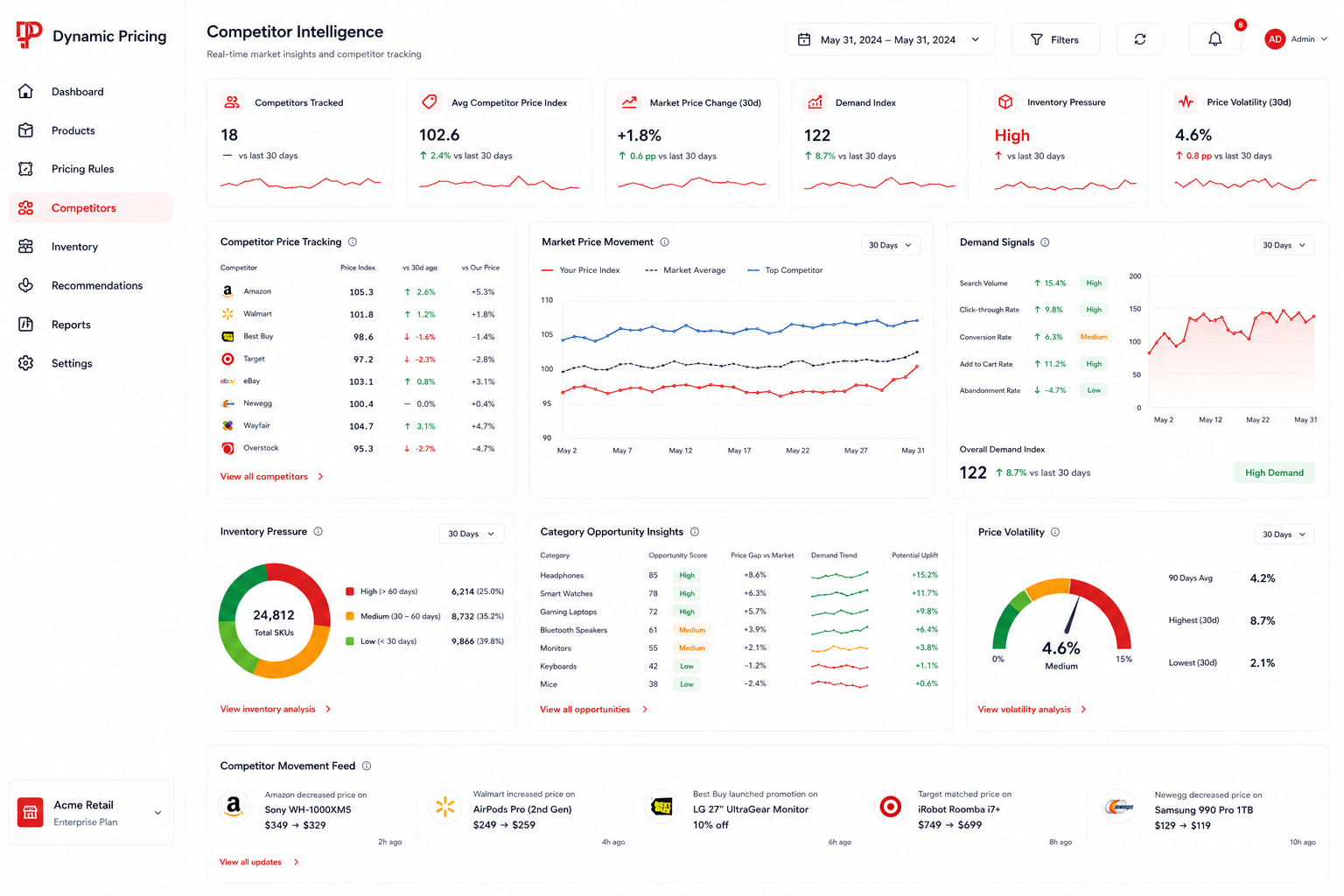
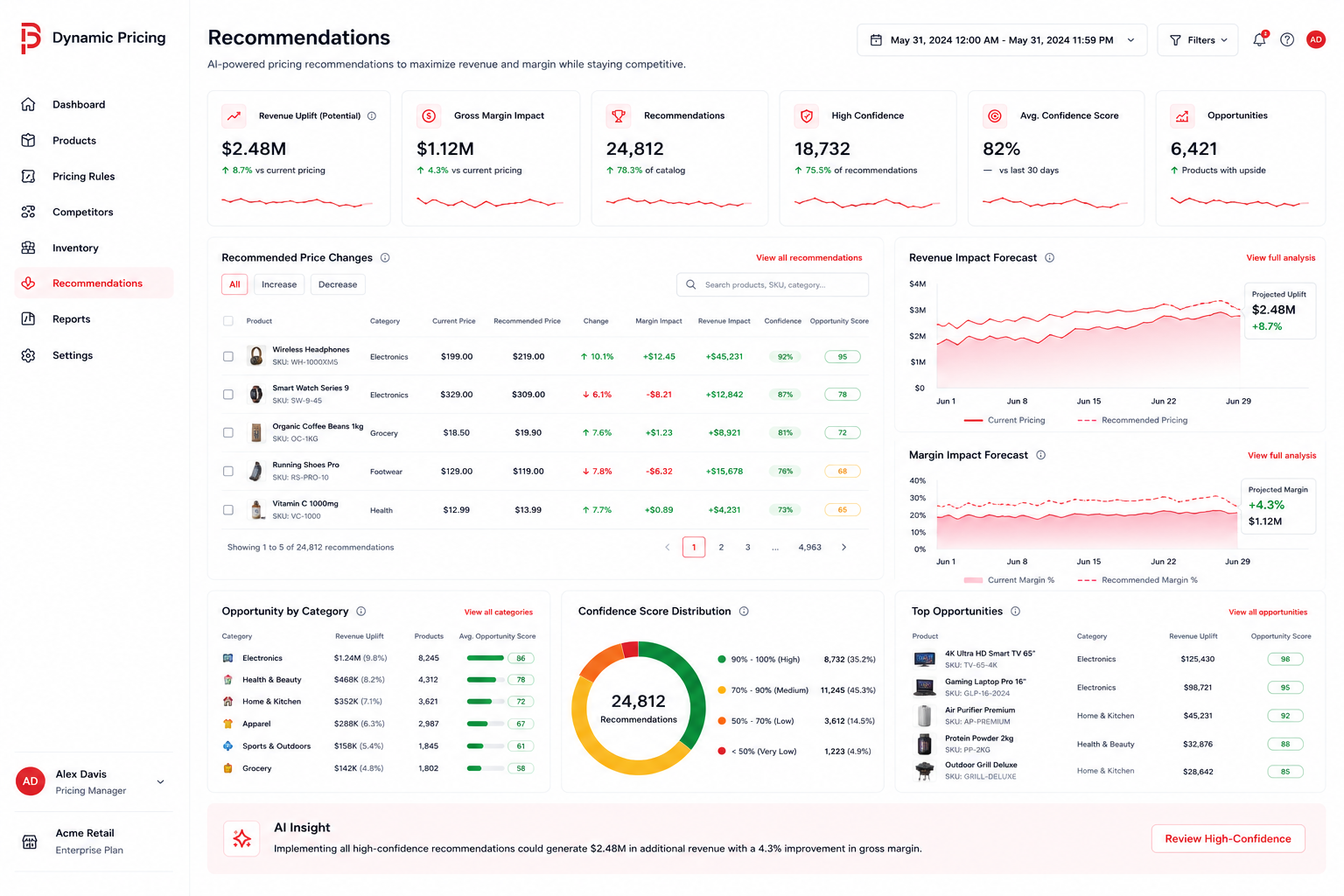
The model can suggest. It cannot ignore your margin rules.
What your team actually sees.
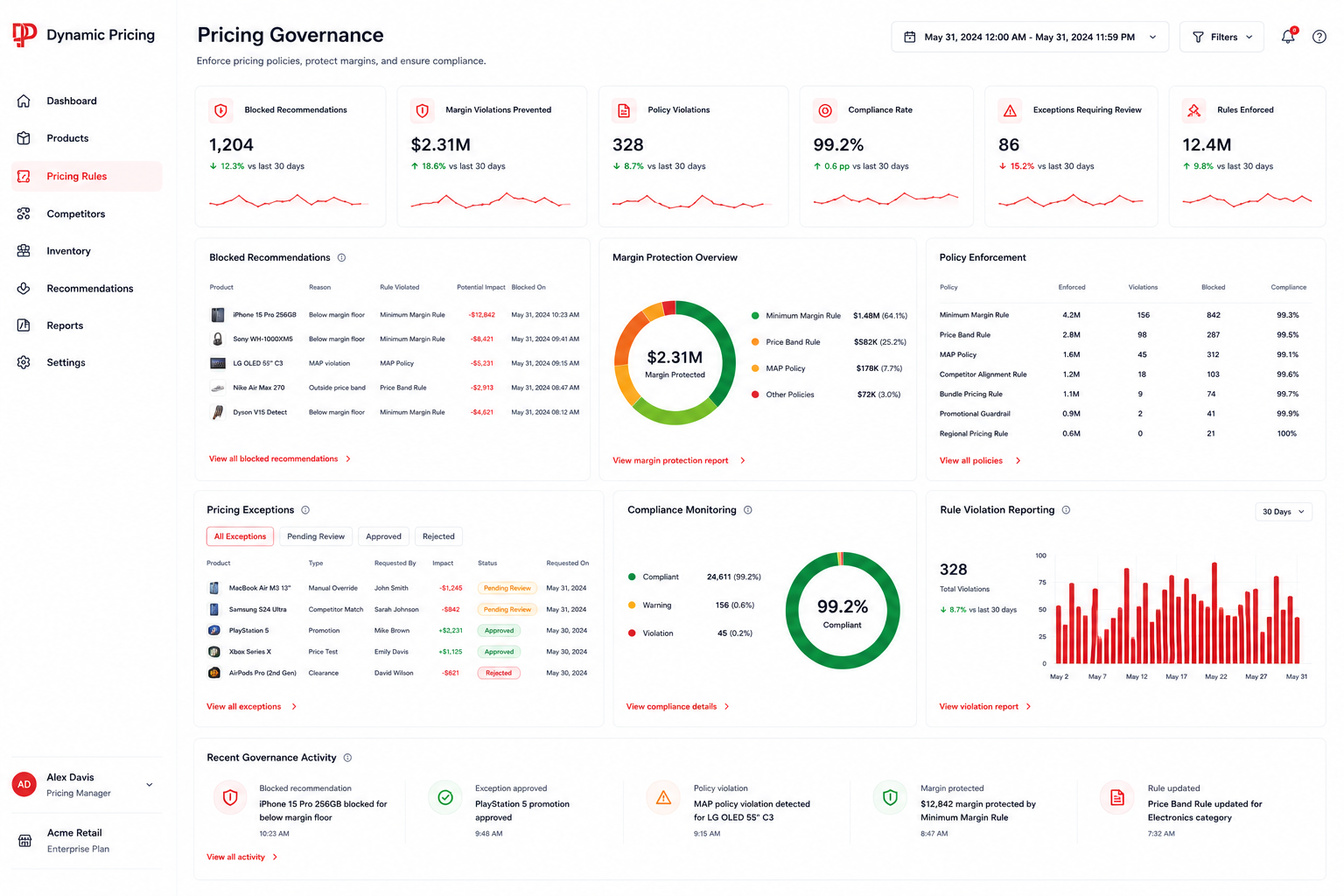
Live dashboard, margin guardrails, demand signals, competitor movement, recommended changes, and pending approvals in one view.
Faster pricing moves.
Protected margins.
-
Revenue opportunity
Demand-sensitive recommendations capture pricing opportunities static rules often miss.
-
Margin guardrails
Automatic checks block suggestions below your approved minimum margin.
-
Faster pricing refresh
Adjustments calculated every day instead of every quarter. This reduces the lag against competitor price movements.
-
Full strategic control
Your team keeps the steering wheel. The model proposes, humans approve, the system executes.
Questions about dynamic pricing
Common questions from pricing, commercial, category, finance, and technology teams evaluating AI-assisted pricing.
What is dynamic pricing?
Dynamic pricing is a pricing approach in which prices can be reviewed or adjusted based on changing market and business conditions. Inputs can include demand, competitor movement, inventory, cost changes, and sales performance. A dynamic pricing system can help pricing teams identify when existing prices may no longer reflect current conditions.
Who is ICS Compute Dynamic Pricing for?
ICS Compute Dynamic Pricing is designed for pricing, commercial, category, and revenue teams that manage large product portfolios and need a more systematic way to respond to changes in demand, competition, inventory, and margins. The system supports decision-making while keeping pricing rules and human approval in place.
How does ICS Compute Dynamic Pricing work?
The system combines existing pricing rules with machine-learning recommendations based on relevant commercial signals. It analyzes inputs such as demand, competitor movement, inventory pressure, cost changes, and sales performance, then proposes price adjustments that remain subject to configured margin rules, guardrails, and human approval.
What data does the system use to recommend prices?
The system can use pricing and commercial signals such as demand, competitor movement, inventory levels or pressure, cost changes, and sales performance. The exact inputs depend on the organization's pricing environment, available data, and configured business rules.
How does Dynamic Pricing protect minimum margins?
Pricing rules and margin boundaries can be used as guardrails when recommendations are generated. Recommendations that fall outside defined pricing constraints can be blocked or surfaced for review, helping pricing teams evaluate changes without removing existing commercial controls.
Does the AI automatically change prices?
ICS Compute Dynamic Pricing is designed to keep human approval and business rules in the pricing workflow. The system generates recommendations and applies configured guardrails before approved changes move toward rollout. The exact level of downstream automation depends on the organization's pricing systems, workflow, and implementation.
How is machine-learning pricing different from static pricing rules?
Static pricing rules typically react to predefined conditions and may not capture changes across multiple market signals at the same time. Machine-learning recommendations can evaluate patterns across demand, competitor movement, inventory, cost, and sales data, while existing rules and margin controls remain in place to govern how recommendations are used.
Can Dynamic Pricing work with an existing pricing strategy?
Yes. ICS Compute Dynamic Pricing is designed to work with existing pricing rules and commercial guardrails rather than replace them. Machine-learning recommendations can be evaluated within the organization's current strategy, approval process, margin requirements, and pricing constraints.
Send us your pricing rules.
We'll show you the moves you're missing.
We model your current pricing logic beside our hybrid system, compare the recommendations against your rules, and show where margin-safe price changes can improve decision-making.
Model your pricing guardrails
We review your current rules, constraints, approval flow, and available signals to identify where dynamic pricing can help without weakening margin control.